
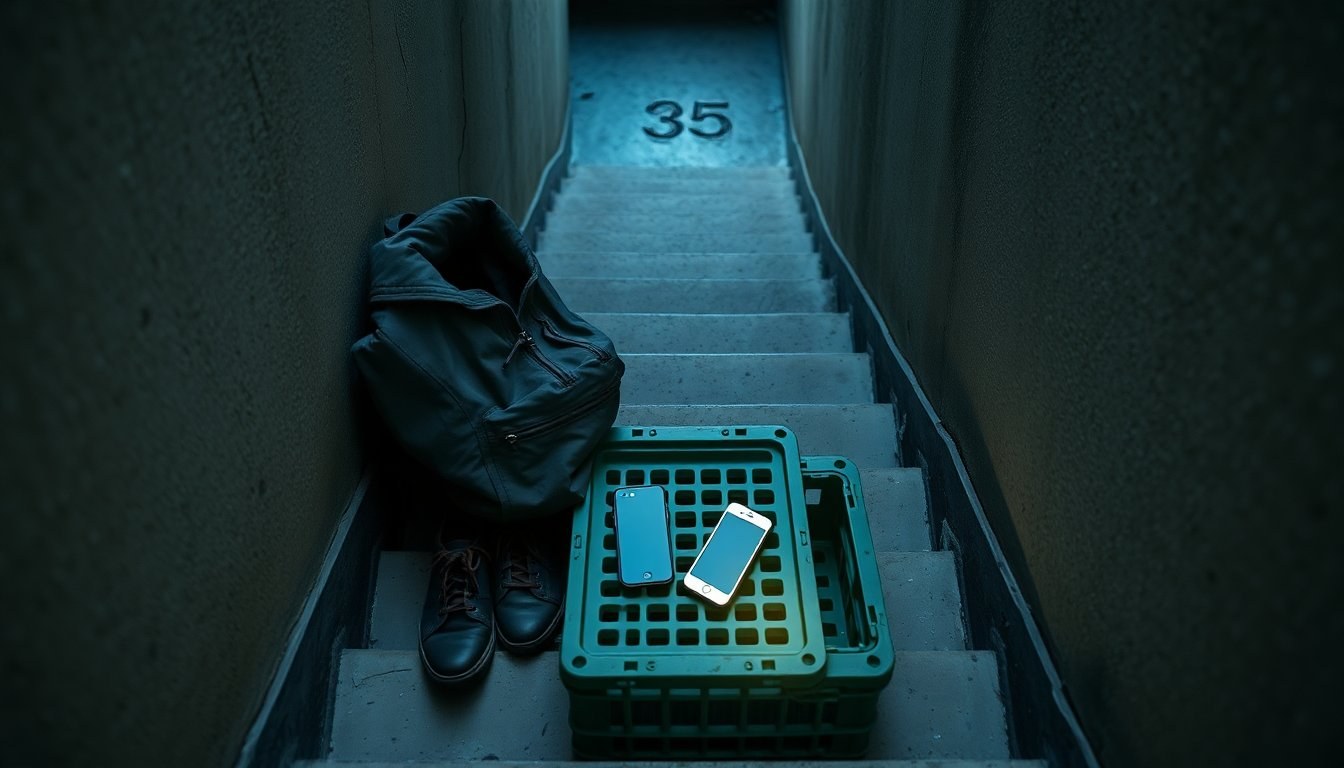
In the small hours, before dawn has stitched itself across the Jerusalem sky, an alert sounds and the neighborhood moves. I learned quickly that running to the miklat — the designated fallout shelter built into the city’s old fabric — becomes an ordinary interruption in an otherwise ordinary life. Over a stretch of days the warnings arrived many times each day, each one prompting the same scramble: shoes, jacket, phone, and down the narrow stairs into the concrete coolness of the shelter. There is a peculiar music to this: the roar of an interceptor followed by what locals call a Beethoven boom, then the hush while everyone waits for the clearance signal.
The shelter itself is a living picture of the neighborhood. In Nachlaot toddlers hurtle down steps and then return to play; elders descend slowly, arm in arm; pets are ferried in carriers alongside rolling suitcases and prayer shawls. In this compressed community you find pianists on a battered upright, the odd connoisseur sharing a sip of something hard at dawn, and even on-the-fly attempts at matchmaking through a QR code – a technologist’s response to crisis. The moment is both improvisation and routine, a mix of informal resilience and weary humor that keeps life moving despite the alarms.
The rhythm of alerts and civilian risk
Repeated warnings have a way of changing how you measure time. The attacks that triggered these alarms originated from multiple fronts, including launches attributed to Iran and subsequent strikes from Hezbollah across the northern border. Israeli defenses executed successful interceptions, but those interceptions sometimes left dangerous debris: bright, gliding fragments—what later reporting identified as parts of a warhead—fell back toward the city. Some of these contained cluster munitions, an especially harrowing weapon because each warhead disperses many smaller bomblets. A bomblet, in this context, is an explosive submunition designed to scatter, and when these reach civilian areas they can cause widespread injury and property damage, as happened in the northern town of Zarzir where dozens were hurt when homes were torn open.
What fell from the sky
Standing at a doorway, phone raised to the sky, I watched glowing spheres descend like strange lanterns before a neighbor shoved me inside. Seeing those fragments fall felt like witnessing a technical problem in slow motion: an interception that solved one danger and created another. Western coverage, on social media and in some outlets, treated this form of attack with varying degrees of attention; locally, the focus is practical: who needs bandages, which shelters are full, and which reservists will be summoned. Everyday survival takes simple, decisive steps: footwear that can be slipped on quickly — locals swear by Hoka slides and Crocs for speed — and a mental checklist that becomes muscle memory.
Why I stayed: learning, love and tradition
I did not arrive in Jerusalem to chase headlines. Part of the reason was the weather back home in the Berkshires; another was a spiritual pull. I returned to a yeshiva where I had studied earlier, and I came to plan a wedding with my fiancée, Revital Ben David. Studying Torah in wartime is viewed by many here as a contribution to the collective effort — a continuation of a long tradition that pairs front-line action with contemplative labor. The late Lubavitcher Rebbe Menachem Schneerson argued after the Six Day War that spiritual study and military deeds can be mutually enabling; that idea, voiced in a 1967 sicha, resonates for those who choose to remain.
Resilience and ritual
Our daily pattern became prayer, study, and repeated shelter runs. At first, jokes and music filled the air; after a week the mood shifted. Conversations grew quieter, the pianist’s flourishes fewer, and young reservists who had recently left for service sat in silence. Revital would check updates while I answered emails; together we visited graves of tzaddikim, sought small moments of sanctity and held onto the belief that ordinary life — marrying, studying, working — remains worth defending. She called living here a zechut, a privilege, and reminded me that this land’s sanctity is bound up with sacrifice and daily care.
Leaving, logistics and the long view
When I finally decided to travel back to the Berkshires to settle practical matters, leaving proved harder than I expected. Flights were rerouted and seats reallocated; at Ben Gurion Airport a flustered U.S. embassy staffer offered a chartered route to Athens while security kept me from check-in. Important carriers such as EL AL prioritized certain passengers, and the overnight train service that usually runs efficiently to the airport was suspended, forcing me into cabs and extra expense. These disruptions are small in the calculus of war but enormous for a traveler juggling rent and limited funds. A later WhatsApp alert — a crowded but genuine lifeline — eventually produced a seat bound for New York.
The return to the Berkshires came before Pesach, and with it a complicated relief: home is now a place that means distance, but not escape from worry. I did not make it to a planned Chabad wine tasting or to museums back in Jerusalem; I left with the conviction that I had done what I could there—learning, planning a wedding, sharing moments in the shelter—and with the uncomfortable knowledge that this tempo of alarms is not sustainable. As Revital put it after another sleepless night, “Ein li koach” — I don’t have the strength. That exhaustion is the quiet, persistent shadow over life here.
My background — the son of a survivor of the Lvov Ghetto and Janowska camp — frames why these nights felt urgent. As a longtime journalist now living between two places, I find myself measuring fate in alarm times, study hours and the small acts of normalcy that make community possible. In the shelter, amid shared pastries and weary jokes, people choose to stay, to learn, to hope, or to leave for the practicalities of life elsewhere. That choice, and the daily rituals that accompany it, are the true story.


