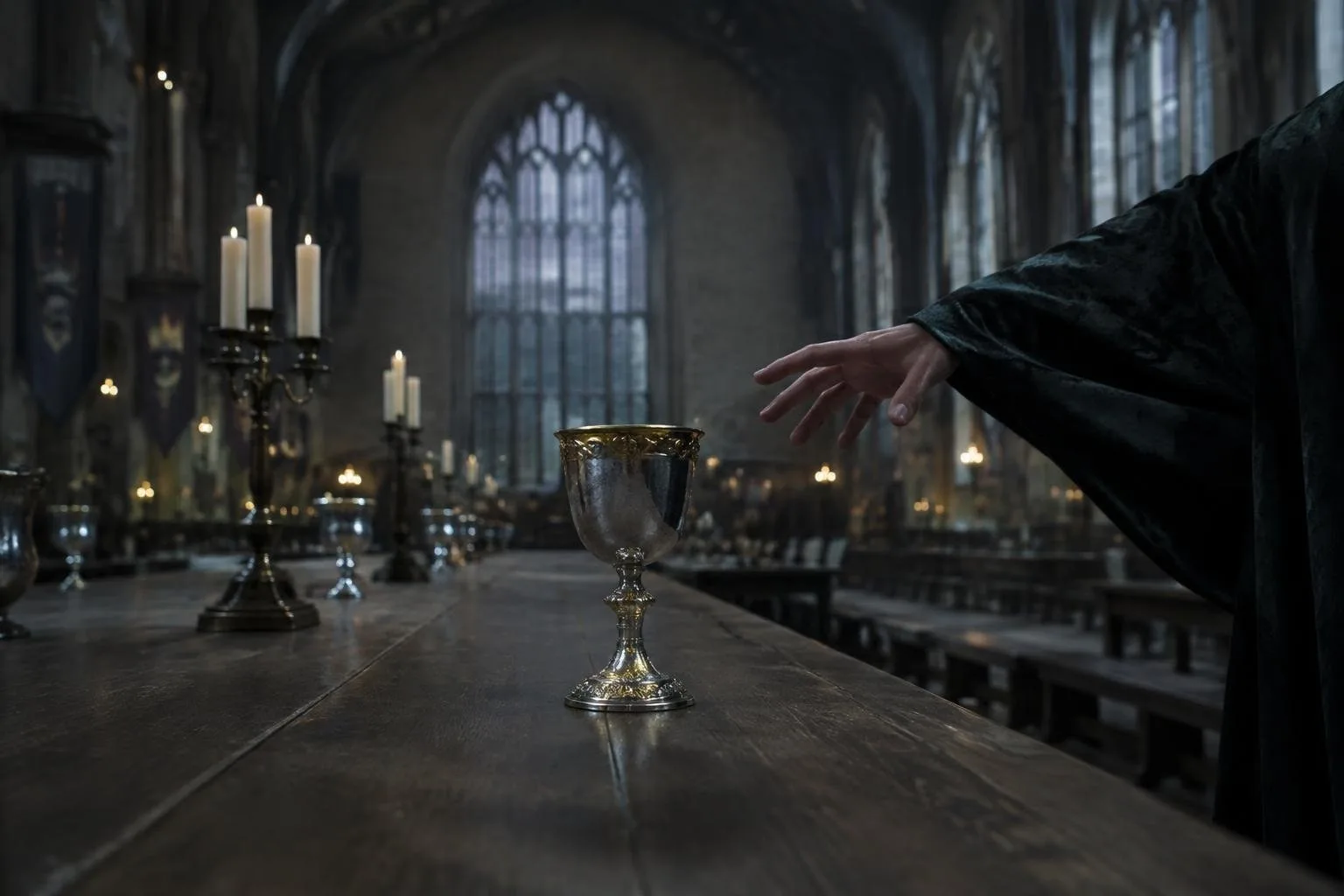
The first glimpse of HBO Max’s new Harry Potter series arrived as a holiday teaser on social media, showcasing a banquet at Hogwarts where John Lithgow appears as Albus Dumbledore. Within hours, the clip ignited a torrent of commentary that ranged from bewildered amusement to outright disdain.
Viewers immediately singled out the low-contrast lighting, muted table lamps and a pacing that felt more akin to a corporate advertisement than a magical feast. One user wrote that the characters “look like cosplay” and that the scene “doesn’t spark joy”. Another compared the visual style to an “AI-generated parody”, noting that the clean, flat image “doesn’t even look real”. The criticism extended to the set design, which was described as “comically flat” and “depressing”. Even the background b-roll of children eating for several seconds was called “raw camera data”.
Why the aesthetic backlash matters
Fans have long associated the Philosopher’s Stone film, directed by Chris Columbus, with warm candlelit Great Halls and a palpable sense of wonder. In contrast, the HBO version’s muted lamp lighting has been interpreted as a loss of the “magic” that defined the original movies. Social-media comments repeatedly invoked the earlier films, with users lamenting that “the directing talents of Chris Columbus are finally appreciated”. The clip’s visual tone, they argue, undermines the whimsical atmosphere that made the books feel alive.
While the criticism is largely aesthetic, it is layered on top of a broader controversy surrounding J.K. Rowling. The author, who serves as an executive producer on the series, has drawn boycotts over her statements on transgender rights. This background has amplified reactions to every piece of promotional material, forcing fans to evaluate the show through both artistic and ideological lenses.
Production choices and the promise of a deeper adaptation
Despite the initial uproar, HBO Max has highlighted several creative decisions intended to broaden the narrative canvas. The series will cover the events of the first book, but it will also introduce flashbacks and unseen conversations not present in either the novels or the earlier movies. For example, teaser images reveal Dumbledore speaking privately with Nicolas Flamel and his wife: a moment that exists in the books but was never shown on screen.
The casting slate includes newcomers Dominic McLaughlin as Harry, Arabella Stanton as Hermione, and Alastair Stout as Ron, alongside veterans such as Janet McTeer (Minerva McGonagall), Paapa Essiedu (Severus Snape) and Nick Frost (Hagrid). John Lithgow takes on Dumbledore, and Warwick Davis reprises a familiar Hogwarts role. The series is set to premiere on December 25 on HBO Max, positioning it as a flagship holiday event.
Showrunner Francesca Gardiner has promised a “book-faithful” approach while also employing a “show-don’t-tell” method. This means that iconic backstories, particularly those of Dumbledore and the titular trio’s parents, will be explored visually rather than merely mentioned. The inclusion of these expanded scenes satisfies a long-standing fan demand for more depth, especially regarding the Marauders’ era and Voldemort’s origins.
From fan-requested spinoffs to a potential franchise roadmap
Since the conclusion of the original film saga, audiences have clamored for spinoff projects. The most prominent post-book venture, the Fantastic Beasts film line, struggled to capture the same enthusiasm, prompting many to call for television-based prequels instead. Desired concepts have included a Marauders-centred series, a full-scale Voldemort origin story, and deeper looks at James and Lily Potter.
HBO’s decision to remake the first book on television, rather than immediately launching a new prequel, reflects a strategic pivot. By delivering a faithful retelling with added layers (flashbacks, new dialogues, and expanded character moments) the platform creates a foundation on which future series can be built. Should the debut perform well, Warner Bros. Discovery is likely to green-light spin-offs that explore Dumbledore’s early years, the Marauders’ mischief, or even a younger Voldemort, leveraging the same production values and cast continuity.
In effect, the series doubles as a remake and a de-facto anthology starter, satisfying both nostalgia-driven viewers and those hungry for fresh canonical material. The blend of familiar plot beats with undisclosed scenes aims to restore confidence after the “Fantastic Beasts” disappointment and to prove that a television format can accommodate the rich tapestry of Rowling’s world.
Overall, the reaction to the first clip underscores how intensely invested the fanbase remains. While the visual tone has sparked immediate criticism, HBO Max’s commitment to a comprehensive, lore-rich adaptation may yet turn the conversation toward the series’ narrative ambitions and the broader future of the Harry Potter franchise.