
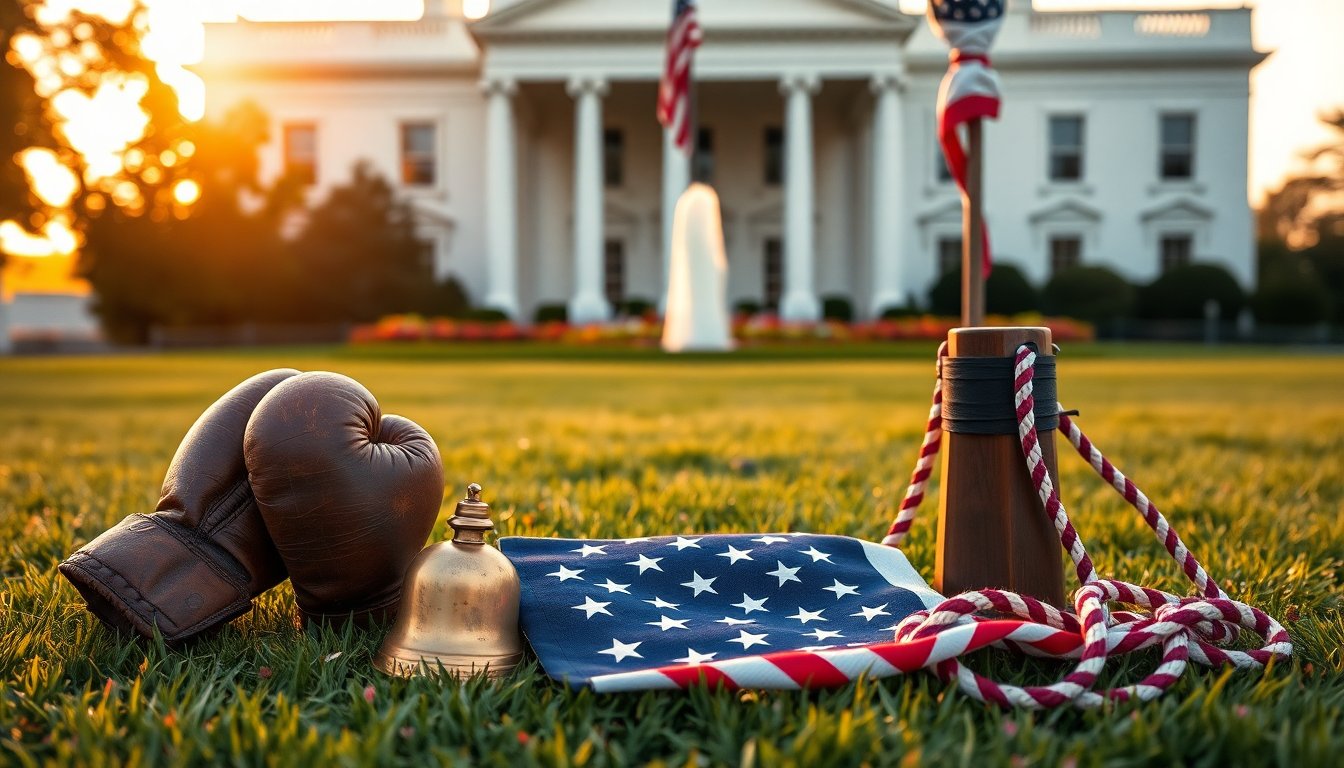
The notion of staging a full-scale mixed martial arts card on the South Lawn of the White House moved quickly from an eyebrow-raising idea to a confirmed event. On July 3, 2026, President Donald Trump publicly proposed the plan, and by August 29th UFC chief executive Dana White had signaled that the project was real. The card, being promoted as UFC Freedom 250, is intended to tie into national celebrations; the date chosen is June 14th, also noted as Flag Day and mentioned as the president’s 80th birthday. The announcement blurred political theater, sports spectacle, and big-budget marketing into one headline-making moment.
The logistical outline that followed reads like a production brief for a major festival. Organizers expect seating for roughly 3,000 to 4,000 guests on the South Lawn with additional viewing capacity via giant screens on the Ellipse, said to accommodate some 85,000 more watchers. Reported plans include weigh-ins at the Lincoln Memorial and the colorful rumor that fighters might process from the Oval Office toward the cage. Broadcasters lined up include CBS with streaming on Paramount Plus, and promoters insist that no taxpayer funds will subsidize staging or cleanup.
Money, cleanup and the spectacle of scale
The financials underline how far fight promotion has evolved into corporate entertainment. The UFC has reportedly taken responsibility for all event costs, including a projected restoration bill for the South Lawn estimated between $700,000 and $1,000,000. Industry estimates for the full production have floated near $60 million, covering staging, security, broadcast rights, and other operational needs. For a promoter like Dana White, who built a global brand, the appeal is obvious: staging a one-of-a-kind fight on the grounds of the White House creates irrepressible media coverage, a unique advertising platform, and a claim to a cultural milestone.
Production choices and public access
Security concerns mean that traditional public ticketing is limited; instead, the event is likely to favor invitation lists and controlled access, a model that preserves spectacle while reducing risk. The use of large external screens and broadcast distribution expands audience reach without compromising on-site controls. These decisions reflect a modern event-management trade-off: maximize reach through broadcast and digital channels while tightly managing the in-person experience, all under the banner of an undeniable publicity moment for both the UFC and the White House.
Promoters who invented the formula
The tactics on display in the White House proposal have deep roots. Beginning in the early 20th century, promoters like Tex Rickard transformed prizefighting from illicit back-room brawls into major national events. Rickard staged headline-grabbing bouts—famously the 1910 clash between Jack Johnson and James J. Jeffries, and later elevation of Jack Dempsey—and used theatrical stakes, large purses, and patriotic pageantry to compel public interest. Rickard’s instinct was simple: give the contest a larger cultural story, invent memorable matchups, and put enormous sums of money on display to signal importance.
Mass audiences, new media and celebrity crossovers
As mass media evolved, promoters seized new platforms. The Dempsey-era headline fights were amplified by newspapers and radio; decades later, Vince McMahon harnessed MTV and celebrity crossovers to make professional wrestling mainstream. McMahon’s WrestleMania model—an entertainment-first spectacle featuring stars from music and film—followed Rickard’s playbook but deployed television, closed-circuit distribution, and celebrity casting to scale the business. The pattern is consistent: connect a sporting contest to a broader cultural narrative and distribute it wherever audiences live.
UFC’s rise and the era of corporate consolidation
The UFC itself is a modern success story that used similar mechanics. After its 1993 debut with minimal rules and the brutal appeal of octagon combat, the organization professionalized—introducing rules, weight classes, and mainstream marketing. In 2001 the Fertitta brothers bought the promotion and placed Dana White at the helm; reality television such as The Ultimate Fighter in 2005 accelerated mainstream acceptance. Growth led to big-money transactions: a 2026 sale and then the 2026 merger with the WWE under the TKO umbrella created a combined sports-entertainment juggernaut capable of bundling events and cross-promoting in unprecedented ways.
Whether on a packed outdoor field in 1919 or a presidential lawn in the 2020s, promoters have relied on the same durable levers—dramatic narratives, celebrity alignment, bold financial promises, and media-first distribution—to turn fights into cultural events. The planned UFC Freedom 250 is simply the latest iteration: a high-cost, high-visibility experiment that recasts combat sport as national theater and tests how public institutions, private promoters, and modern media can collaborate to create an unforgettable spectacle.


