The quality and international profile of Southeast Asian cinema have grown sharply, and Ifa Isfansyah, festival director of Indonesia’s Jogja-Netpac Asian Film Festival (JAFF), wants governments to treat film as part of their cultural strategy. He singles out the Philippines for its consistency in developing talent and keeping a presence abroad.
A call for long-term investment
Isfansyah said that, for now, the region’s success is still more of an anomaly than a fundamental structural shift. International recognition, he argued, depends largely on the strength of individual films and filmmakers rather than on a sustained strategy to strengthen cinema as part of a country’s cultural infrastructure.
“I believe countries need to recognize cinema as an important part of their cultural strategy, not merely as an industry or a source of national prestige,” he said. “This requires long-term investment, institutional support, and a commitment to building sustainable connections with the international film community.”
Isfansyah is also one of Indonesia’s leading independent producers. He founded Forka Films, formerly Fourcolours Films, in 2001. His producing credits include Kamila Andini’s Yuni and Before, Now & Then, as well as her latest, Four Seasons in Java, which played Toronto’s Centerpiece programme and Busan this year.
JAFF’s 21st edition and its themes
The 21st edition drew more than 1,000 submissions, and the festival selected 254 films from 34 countries. The programme runs under the theme “Influx”. It opens with Lawrence Fajardo’s Filipino drama Silenced Nights and closes with Ueda Makoto’s Japanese comedy-drama You Are the Film.
Isfansyah said the current social, political and economic climate pushed the team to rethink what staging a festival should mean this year. “We did not want JAFF to become a celebration disconnected from the realities around us. This is not a moment for an excessively festive atmosphere or for pretending that everything is fine.” He said the opening film speaks directly to present-day anxieties, and that opening with it was meant to signal that “cinema must remain connected to the world we live in, and a festival should not be afraid to confront difficult realities.”
The closing film is aimed partly at younger viewers, as a reminder of where JAFF came from. “I think it is important to remember that a film does not have to be big to be powerful.” Among the submissions, Isfansyah noticed filmmakers growing bolder, especially in short films. “Short films are increasingly becoming spaces for creative risk-taking,” he said.
The market opens in Yogyakarta
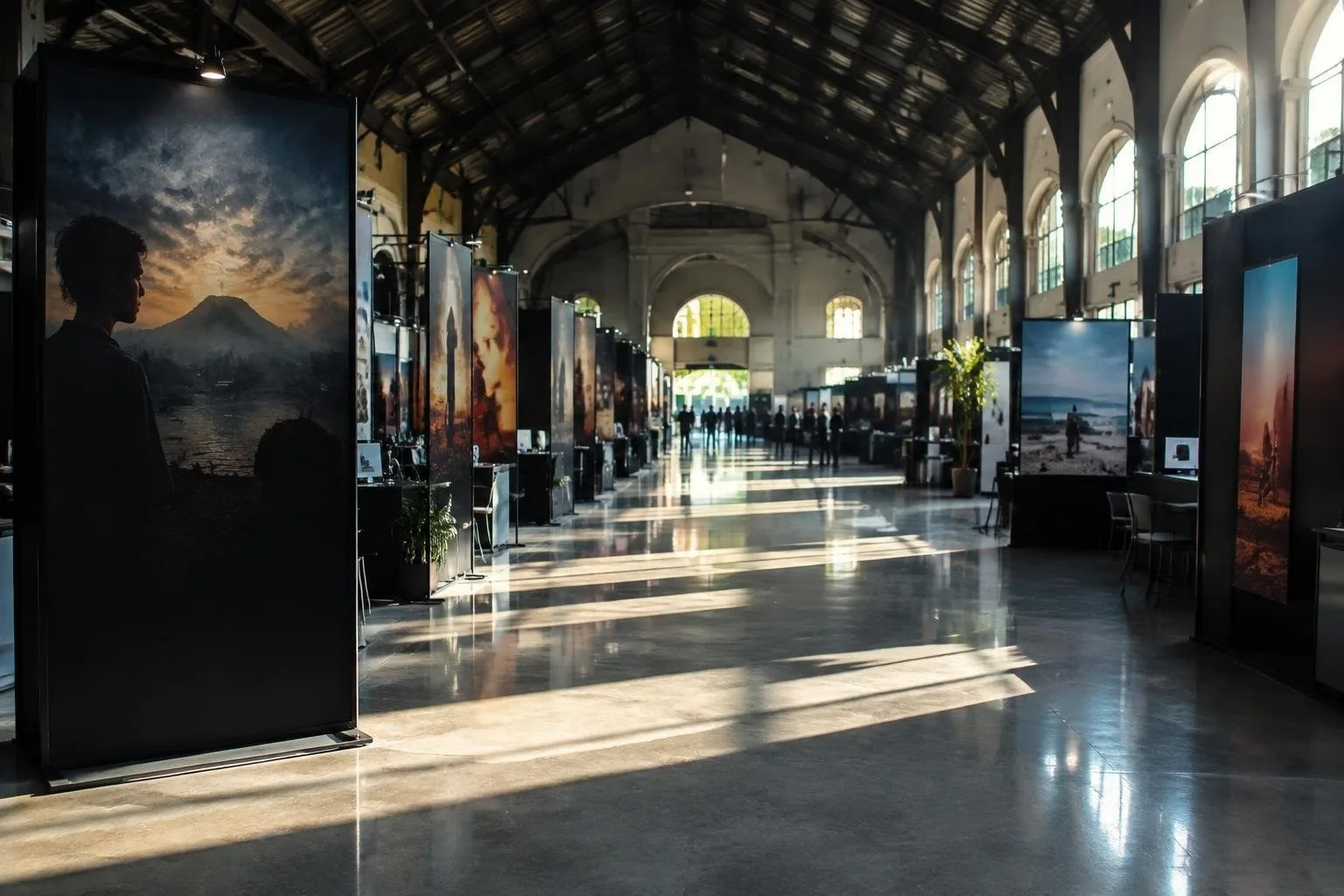
JAFF Market, which organisers describe as Indonesia’s biggest film market, opened its third edition at the Jogja Expo Center in Yogyakarta. Market director Linda Gozali urged the local industry to judge its growth on quality as well as scale. The three-day market runs alongside the festival.
Gozali said the first edition was an experiment. “It is actually a question that we threw into the Indonesian ecosystem whether or not we truly need a film market. And the response was definitely overwhelming,” she said. The exhibition floor hosts 116 exhibitors, and the opening day was reserved as a business day for accredited badge holders.
“Economically speaking, we are actually in a cautious mood,” Gozali said. She added: “We have to define growth not just in terms of the quantity, no. Because growth in quantity itself will reduce at a time where there are challenges around the environment. So we look at growth as well from the quality point of view.”
The JAFF Future Project selection comprises 12 projects, and the IP Connection strand has opened to international properties for the first time. Among the new initiatives is a Producers Exchange, whose first batch numbers 14 producers. The Indonesia-France Film Lab X MTN Lab, now in its third year, is run by the French Embassy and the Institut français d’Indonésie, with Paris film school La Fémis supplying the mentors. Gozali closed with a remark on the market’s third outing: “People say the third is the charm,” she said. “Hopefully it is, fingers crossed.”