
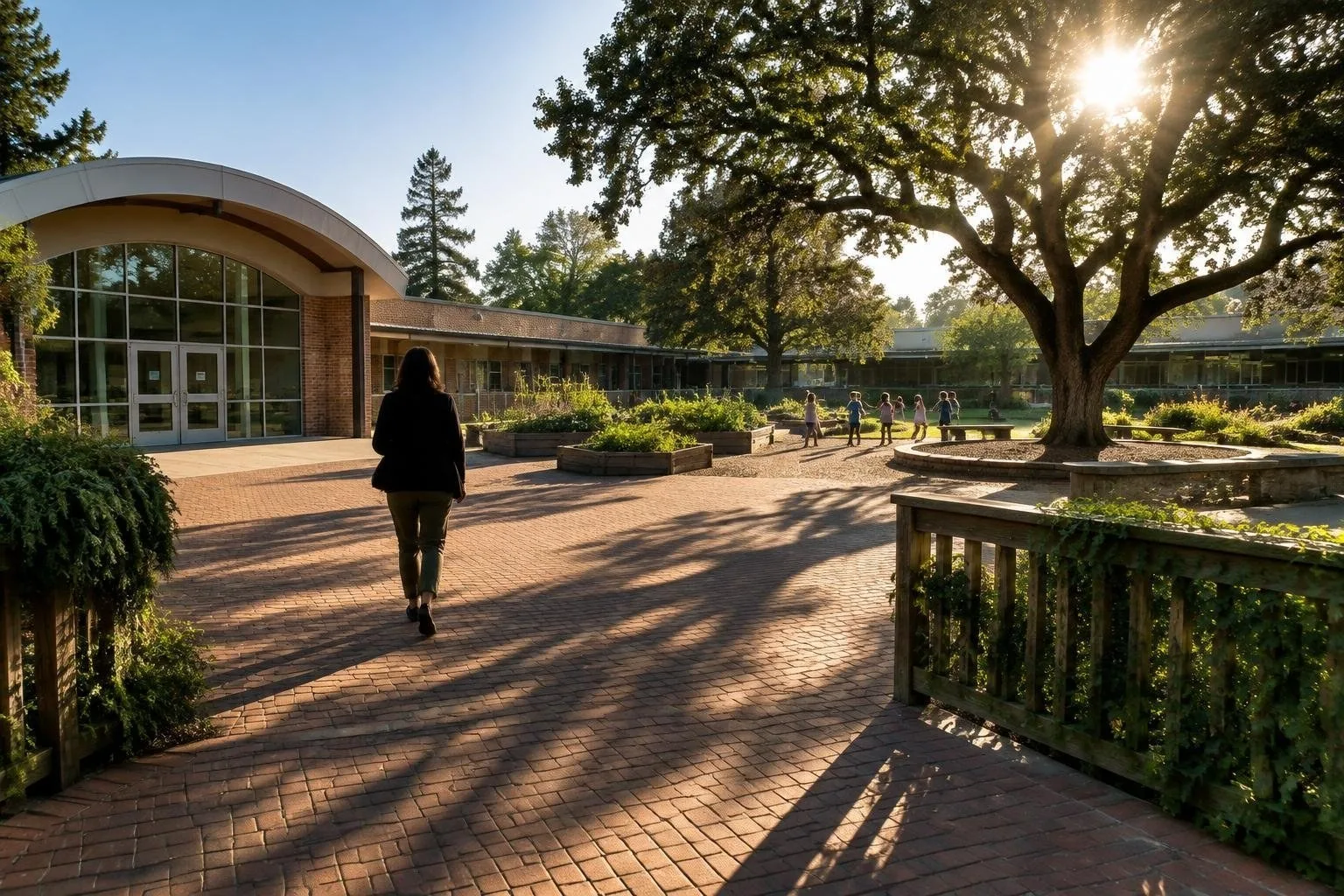
At Wilson Hill Elementary, a new initiative called Den of 10 is turning the traditional classroom hierarchy on its head. Rather than limiting a child’s primary adult contact to a single teacher per year, the school has organized a “family” of roughly ten students from kindergarten through fifth grade around every staff member. The concept mirrors similar programs used in districts across the United States, but Wilson Hill has tailored it to emphasize continuity, peer mentorship, and a stronger emotional safety net for every child.
The structure is straightforward yet powerful. Each educator, administrator, or support employee is assigned a cohort of about ten learners, and that relationship persists for the child’s entire elementary career. Younger pupils gain immediate access to older peers who act as role models, while seniors acquire leadership experience by guiding their junior companions. The program launched its inaugural Den of 10 Day on September 11, when fifth-graders escorted kindergarten and first-grade buddies to school activities, establishing a rhythm that will repeat monthly.
How the Den of 10 model operates
Every member of the school staff, from the principal to the custodial team, becomes a fixed point of contact for a small, mixed-grade group. The assigned ten-student roster is designed to stay unchanged, allowing relationships to deepen over six years. Students meet their “family” during a dedicated weekly slot, where they collaborate on projects, discuss personal goals, or simply share a snack. The model also incorporates a buddy system: older students are paired with younger ones to escort them to lunch, help with classroom transitions, and assist during school-wide events. This arrangement supplies younger children with a relatable adult and an older peer to emulate, fostering a sense of belonging from day one.
Academic and social-emotional outcomes
Wilson Hill counselor Erin Zelinski-Righter emphasizes that the program targets more than grades. “When students feel connected to the school community, attendance improves and academic performance rises,” she explains. The Den of 10 framework creates multiple layers of connection—student-to-student, student-to-adult, and adult-to-adult—each reinforcing the others. Research on social-emotional development suggests that such networks reduce anxiety, increase engagement, and promote resilience. In practice, the school has already observed a modest uptick in daily attendance and a noticeable boost in classroom participation among participants.
Older students also reap benefits. By acting as mentors, they practice leadership, communication, and empathy—skills that translate to higher confidence and better performance in core subjects. For example, a fourth-grader who previously struggled with organization reported feeling more capable after regularly guiding a kindergarten buddy through daily routines.
Special activities and community partnerships
To cement the sense of collective responsibility, the school integrates creative exercises into the monthly gatherings. One such activity, borrowed from the Columbus Foundation, is called The Big Table. Students arrange Lego blocks while discussing statements like “My community is great because …” and “My community would be better if …,” then display their reflections throughout the hallways as a visual reminder of shared values. The exercise directly addresses the national loneliness epidemic by encouraging every child to feel invited to the communal table.
Beyond internal events, Wilson Hill is partnering with the nonprofit Seeds of Caring and plans to collaborate with additional agencies throughout the year. These external alliances broaden the support network, offering resources such as mental-health workshops and volunteer tutoring. A concrete illustration of the program’s impact involves a student with selective mutism. After joining a fourth-grade Den of 10, the child found a trusted adult and peer group, which dramatically reduced communication barriers and allowed her to participate more fully in class.
With 37 adults overseeing roughly 440 students, the school now has a “wider net” for spotting and addressing individual needs, a crucial advantage in a setting that only employs a single counselor. As Mrs. Zelinski-Righter notes, “We can leverage an existing relationship rather than starting from scratch when a student requires help,” highlighting how the model amplifies the effectiveness of limited counseling resources.


